Regenerative agriculture

Next, you may ask, what is this “Regenerative” buzzword? These are win-win practices like cover crops, compost, reduced tillage, reduced fertilizer and pesticide use, planting hedgerows, preserving and restoring riparian and forest habitat, which increase soil health, water and nutrient retention, biodiversity, and vineyard resilience to drought and increasing high heat days. At the same time these practices store more carbon in the soil – called carbon sequestration. It is exciting that growers have an active and meaningful role that they can play in drawing down carbon emissions and being a part of the climate change solution!

More and more we want to turn to nature as an ally, maximizing Integrated Pest Management (IPM). This means using cover crops that attract beneficial insects that eat the nasty bugs we don’t want in the vineyard, or even releasing vineyard-friendly insects like ladybugs. This also includes putting up bluebird and owl boxes and raptor perches, to help with bugs, rodents, and scare away unwelcome birds that eat the grapes, like starlings.

We also have to recognize that “weeds” are a human construct. Sometimes we are battling weeds for purely aesthetic reasons. In the farm setting, we need to return to seeing some “wild” as beautiful.

Here are some examples of other ways sustainable winegrape growers are limiting or eliminating the use of synthetic pesticides:

  • Napa Green has developed a “Weed Management Toolkit,” established a pool of matching funds that growers can apply for to support phaseout, and has a series of training workshops to assist members in this transition.
  • Using mechanical and cultural tools (as in muscle with shovel) to clear weeds
  • Growers using regenerative practices (e.g., cover crops, compost, reduced tillage, reduced pesticide and fertilizer use) to maximize soil and plant health have seen increased resilience to viruses
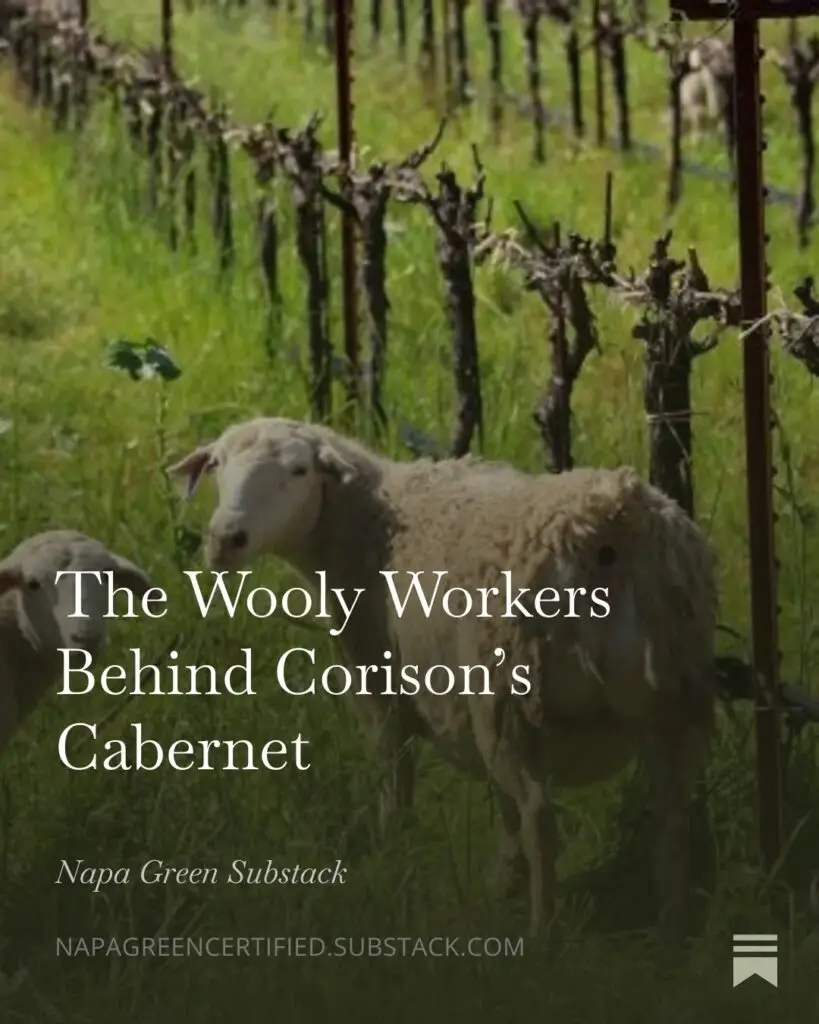
  • Introducing rotational grazing of sheep, who serve as natural lawn mowers and add nutrients to the soil (as in scat)
  • Planting insectaries, preserving and restoring riparian and forest habitat, and other ways of increasing biodiversity in the vineyard
  • Strictly limiting or eliminating the use of rodenticides

sustainability spotlight

"In the 1980’s, when we were reviving the Inglenook estate, we committed to organic farming practices. In 1994 we were among the first growers in the Napa Valley to have our estate vineyards certified organic. Our vineyard team is focused on the ecological stability of the whole farm system, with long-term practices that build soil and vine health, which buffers against pests, disease, drought and other extreme conditions. Our Vineyard Supervisor, Francisco Ortega, has been with us since 1984, and most of the crew has been here for a decade or more. They’ve watched everything grow, they understand particular issues in each area, and they cultivate natural defenses. This includes welcoming natural predators – releasing beneficial mites, installing bluebird, bat and owl boxes. Our Director of Vineyard & Cellar Operations, Enrique Herrero, feels that the careful attention and vigilance in the vineyard, with each vine visited 10 times a year, also means we quickly catch and address problems that could affect the quality of the grapes. As I see it, there are no good reasons not to farm organically. Nature supports us when we support her."

Eleanor Coppola, Inglenook

Resources

sponsors

Napa Green is grateful to our industry and community partners, who support regenerative ag, soil health and biodiversity. To become a champion of Napa Green please reach out to Napa Green.