
Kelly J. Hayes | WineInk
“Everything we put into the soil goes into the vine. Then it goes into the grape. And then into the wines and yes, then into our bodies, no? The line is direct,” said Jean-François Ott as he precisely explained why the three estates of his family-owned Domaines Ott wines in the Provence and Bandol regions of France are farmed organically.
It may seem obvious, but much of the time we don’t consider that direct connection between the source of our wines and what we ultimately consume. In wine, we may often talk about how soil and terroir affect the taste of our wines but what may be lost is how that soil, the earth itself, is treated by those who make the wines.
There is no better time to reflect on that connection than Earth Day.
A NEW DAY
There was a time, not that long ago, when wineries, especially large industrial ones, were producing bulk wines farmed exclusively for immediate profit. Using chemicals to tame the elements of nature that were unfriendly or cumbersome in wine production was just the way business was done. But there were always outliers, those who understood that the value and the future of wine is predicated on how the vineyards are treated.
In Europe there are many small, family-owned wineries that have long practiced organic and biodynamic farming, caring as much for the earth — the source of their wines and livelihoods — as they did the wines themselves. And while the domestic wine industry may have been slower to adapt, a culture of sustainability has been embraced by many wineries to reflect the need to be cognizant of the entire winery ecosystem.
SPOTTSWOODE’S STEWARDSHIP
“Earth Day is more important than ever,” said Beth Novak Milliken, president and CEO of St. Helena, California-based Spottswoode winery. “When you consider the challenges to the environment, the world has to act. We all have an obligation to lead by example.”
Novak Milliken presides over a winery that is not only recognized as producer of some of the Napa Valley’s finest Cabernet Sauvignon, but has also been an acknowledged leader in environmental awareness for close to four decades now.
“Actually, it was our then-winemaker Tony Soter who first recommended the concept of making our vineyards organic to my mother,” she said of the a-ha moment that has influenced Spottswoode Winery since 1985, when they first began to farm organically. “There hasn’t been a chemical or pesticide used in our vineyards since then,” she says with pride.
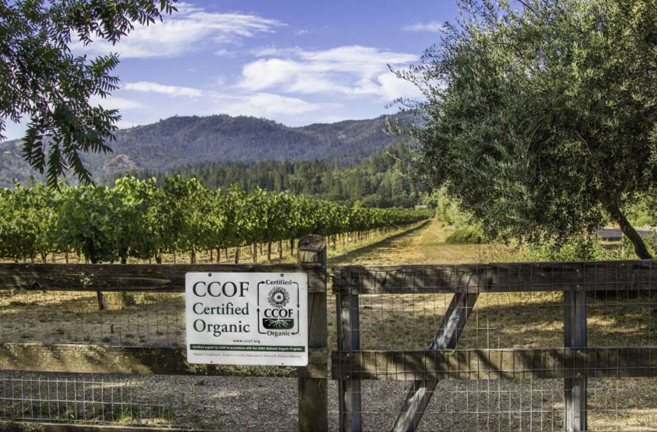
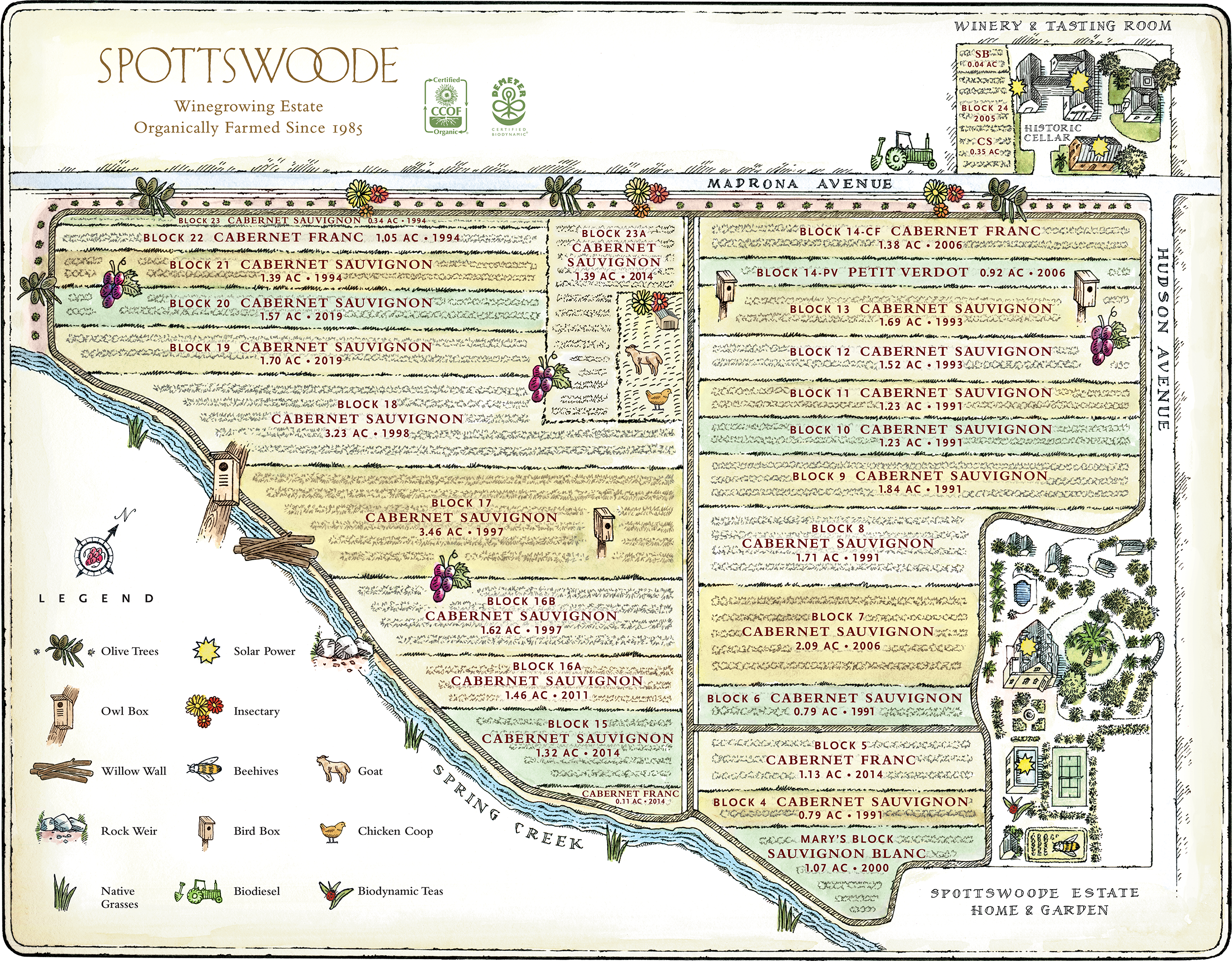
While Spottswoode’s focus is on the production of the highest quality Cabernet Sauvignon and Sauvignon Blanc, the mission has also been about creating a business model that is as sustainable for the land as it is for the bottom line. Today the 46-acre property is certified as both organic (California Certified Organic Farmers-CCOF) and biodynamic (Demeter).
“We hope to build resiliency into our vineyards systemically,” Novak Milliken says, “to build a holistic, healthy system that will carry forward to future generations.”
And that mission relies on innovations in both the vineyard and the winery.
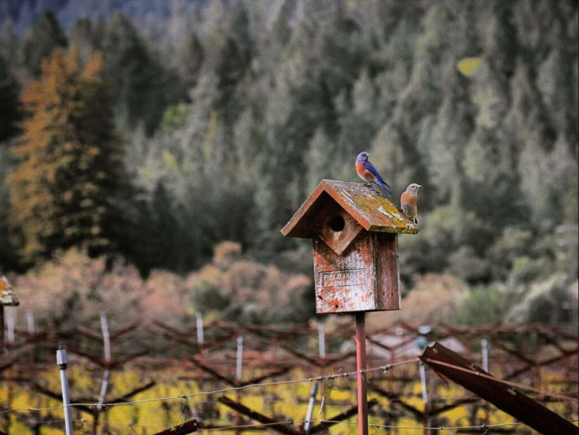
“In the vineyard there are bird boxes and insectaries to help create biodiversity. We have four cashmere goats and some pigs that are really more like pets,” she laughed. “The goal is to bring a life force to the vineyard.”
There are also trellising systems and vine spacing decisions that make the vineyards more efficient and less reliant on intervention.
At the winery, the power is supplied almost entirely by solar panels and there is new equipment that reduces the amount of water used in the production process. “Winemaking requires water but we keep a close eye on usage and monitor all of our wells. And we share that information.”
“While I’m not sure that you can taste two wines side by side, one that is organic and one that is not, and pick the organic wine, I do believe it makes a difference in what is in the glass,” Novak Milliken insists. “I can’t even begin to consider not farming and making wines this way.”
“I’m an optimist,” Novak Milliken says about the state of sustainability in the Napa Valley, noting the upcoming Napa Green Vineyard designation that is about to be launched. “Strides are being made; we would love to see more wineries going organic. We want to be an inspiration to others.”
BOUCHAINE’S MISSION
“So much of what we do is about leaving the land in a better place for future generations. We live and breathe grapes and wine — but we also live on this dirt, breathe this air, and drink this water,” said Chris Kajani, winemaker and general manager of Bouchaine Vineyards, on the mission of the Napa, California, winery that she manages.
In 1970 when Earth Day was first launched, the idea of “sustainability” was foreign to most industries, including winemaking. But 51 years later, the word has become a mantra for wine producers.
“Nobody wants to be spraying Roundup or chemicals in their vineyards anymore,” Kajani said. “But there is so much more to sustainability than just not using chemicals. It comes in layers, really — there is water use and erosion control, how you plant cover crops between the vines, how you manage birds or pests.”
Real sustainability reflects a holistic view of how to support the land that supports the winery as well as the land around it.
Bouchaine’s location at the bottom end of the Carneros region of the Napa Valley means that they are the last stop before the San Pablo Bay for all of the water that flows through the valley. “It’s really important that we are concerned with soil erosion, so we don’t put things into the bay that will affect the fish.” To support that effort, Bouchaine became a Fish Friendly Farming-certified vineyard in 2004, a step that confirmed their commitment to the local environment.
There are a whole host of actions that Bouchaine has taken to create a sustainable ecosystem. They have planted cover crops such as beans, clover, oats, barley, peas, vetch and rye between the rows of vines to prevent soil erosion and to add organic matter that sustains the healthy balance. Natural waterways have been improved to allow proper drainage and flow. Raptors are brought into the vineyard to naturally deal with birds and rodents. And pests are managed by using pheromone traps to disrupt the mating rituals of bugs naturally.
“We are dedicated to leaving a gentle imprint, so that this land can be enjoyed for generations,” Kajani said about the programs they implement.
In the world of wine, every day is Earth Day.
About Napa Green: The Napa Green 501c3 is a global leader in sustainable winegrowing, setting the highest bar for sustainability and climate action in the wine industry. Napa Green facilitates whole system soil to bottle certification for wineries and vineyards, and provides the expertise, boots-on-the-ground support, and resources to continually improve. Learn more at https://napagreen.org/participating-members/.
Anna Brittain
Napa Green
+1 805-636-3329
email us here
Visit us on social media:
Facebook
LinkedIn
Instagram
In 2023 @napagreen certified member @dominusestatewinery did an LED retrofit with @mcecleanenergy saving an estimated $14,500 per year with an additional $5,800 incentive.
Read more at the link in our bio.
#energyefficiency #climateaction #wineindustry

We’re thrilled to announce the new @napagreen Board Chair, Molly Sheppard, who is the VP of Winery Strategy @spottswoodewinery, a leader in sustainability.
@mkshepp’s dedication to sustainable practices and ongoing support of the Napa Green community make her the perfect fit for this leadership role.
We’re grateful for an amazing board of industry leaders and advisors who bring diverse perspectives, expertise, and passion for climate action to support the success of Napa Green and our members!
#womeninwine #wineindustry #nonprofit
We all know that sheep are the cutest but why are they in so many vineyards?
Cori Carlson, owner of @napapastureprotein shared the ecological goals of grazing a vineyard, along with this one key takeaway at our recent @napagreen workshop.
🐑 🐑 🐑
#woolyweeders #regenerativevineyard #soilhealth
Join us on April 9, 2026 @charleskrugwinery to explore climate smart opportunities, sustainable glass, closures and more ways to green your supply chain.
We will share case studies, hear about climate-smart and alternative packaging, clarify what materials are truly recyclable, and identify new ways to divert more waste from the landfill.
With speakers from Verallia, @naturalcorkcouncil, @cork_supply, Treasury Wine Estates, @freeflowwines, @revinobottles, @keystonecapsules, Wine Industry Zero Waste Collective, @naparecycling and more!
➡️ ticket link in bio!
#winebusiness #wineindustry #supplychainmanagement
Discover four exceptional wineries united by a commitment to sustainability, community, and thoughtful hospitality.
These wineries are not only @napagreen certified but also @bcorporation certified, and through their “B Collaborative” partnership this month, they are offering a special tasting experience: wine club members receive two complimentary tastings, and non-members can enjoy a two-for-one tasting.
Learn More by visiting these wineries.
@artesawinery
@cliffamily
@spottswoodewinery
@troisnoixwine
#winetasting #visitnapavalley
Learn why Natalie Bath, Winemaker at @ruddestate considers @napagreen an important part of their commitment of land stewardship.
#SoilHealth #WomenInWine #RegenerativeViticulture
@napagreen has had a number of growers looking for organic solutions to dealing with nematodes where vines are planted. Our partners at @lallemandplantcareusa have an OMRI approved biological solution.
Learn more in this short video!
#soilhealth #vineyardmanagement #wineindustry
Join us March 17th @grgichhillsestate to connect with cover crop expert Keith Berns, with @greencoverseed, and experienced viticulturists, to leans how you can incorporate soil health practices in your vineyard!
➡️ Registration link in bio.
#soilhealth #regenerativevineyard #covercrop
What is biochar and why is it so cool?
Hear from @napa.char to learn more.
#climateaction #soilhealth #biochar
🐝 “If you build it, they will hum” - Erin Arnsteen, Western Program Coordinator @monarchjointventure
We are grateful for everyone who attended our Biodiversity in the Vineyard workshop last week! It was an amazing day @grgichhillsestate filled with bees, birds, butterflies, a community passionate about biodiversity, and experts providing resources for building biodiversity in YOUR vineyard.
#regenerativeag #biodiversity #worldwildlife #regenerativeviticulture
Join us in congratulating Megan Scott (@love.dream.breathe), our Operations Director, on 6 years at @napagreen. Megan’s positive attitude and “can do” approach to problem solving has greatly contributed to the success of Napa Green and our members.
Thanks for your work and dedication to sustainability!
📸 @brianamarieweddings
📍 @trefethenfamily
#womeninwine #womeninstem #climateaction
Thanks to the @naparegister for publishing this Climate Connection contribution from @napagreen’s Vineyard Program Director, Ben Mackie (@soilrainandhope) highlighting the biodiversity @grgichhillsestate.
If you loved this article, you’ll love our Birds, Bees & Butterflies: Biodiversity in the Vineyard workshop happening today!
#climateaction #regenerativeag #regenerativeviticulture
Friday night dinner dilemma?
Order takeout from @southsidenapa using promo code DONATE and 20% of your order will be donated to @napagreen.
It’s a win: win! You get dinner and @napagreen gets funding to contribute our impactful climate action work in Napa Valley.
Order online or preorder your Fried Chicken Friday pickup for February 27, 2026. Don’t forget to pair it with Napa Green certified wine! 🍽️ 🍷
#dineanddonate #nonprofit #napavalley
Join us Thursday, February 26 to learn about biodiversity in the vineyard.
🍇 Ivo Jeramaz, Winemaker & VP of Vineyards and Production at @grgichhillsestate, will welcome us to the beautiful property and illustrate the various implementation of habitat diversity they have undertaken at the American Canyon ranch.
🍇 Jo Ann Baumgartner & Sam Earnshaw from @wildfarmalliance will provide insight on how to maximize bird habitat and establish hedgerows to support the local ecology.
🍇 Erin Arnsteen from the @monarchjointventure will outline how pivotal vineyard acreage can be to support the dwindling Western Monarch populations.
🍇 Cori Carlson, owner of @napapastureprotein, will explain the ecological goals of grazing a vineyard.
🍇 Ruby Stahel from the @naparcd will join us to discuss the various resources that the RCD has to support habitat enhancement on Napa properties.
🍇 @soilrainandhope from @napagreen will talk about bees!
➡️ Ticket link in bio.
#biodiversity #regenerativeag #regenerativeviticulture
Learn about the herd of cattle calmly grazing the vineyards @ruddestate, contributing to soil health and biodiversity, in our latest post from @soilrainandhope.
➡️ Link in bio.
#climateaction #regenerativeag #regnerativeviticulture #soilhealth
Thanks to @naparegister and @kcuz for this great article about the @regenerativeviticulture and @napagreen #OneBlockChallenge field day @celaniwines.
We had a great time engaging with attendees about opportunities to implement regenerative practices in their vineyards!
If you’re regenerative curious or want to learn more head to the link in our bio!
#climateaction #regenerativeviticulture